



Artist: Eugène Delacroix
Year: 1826
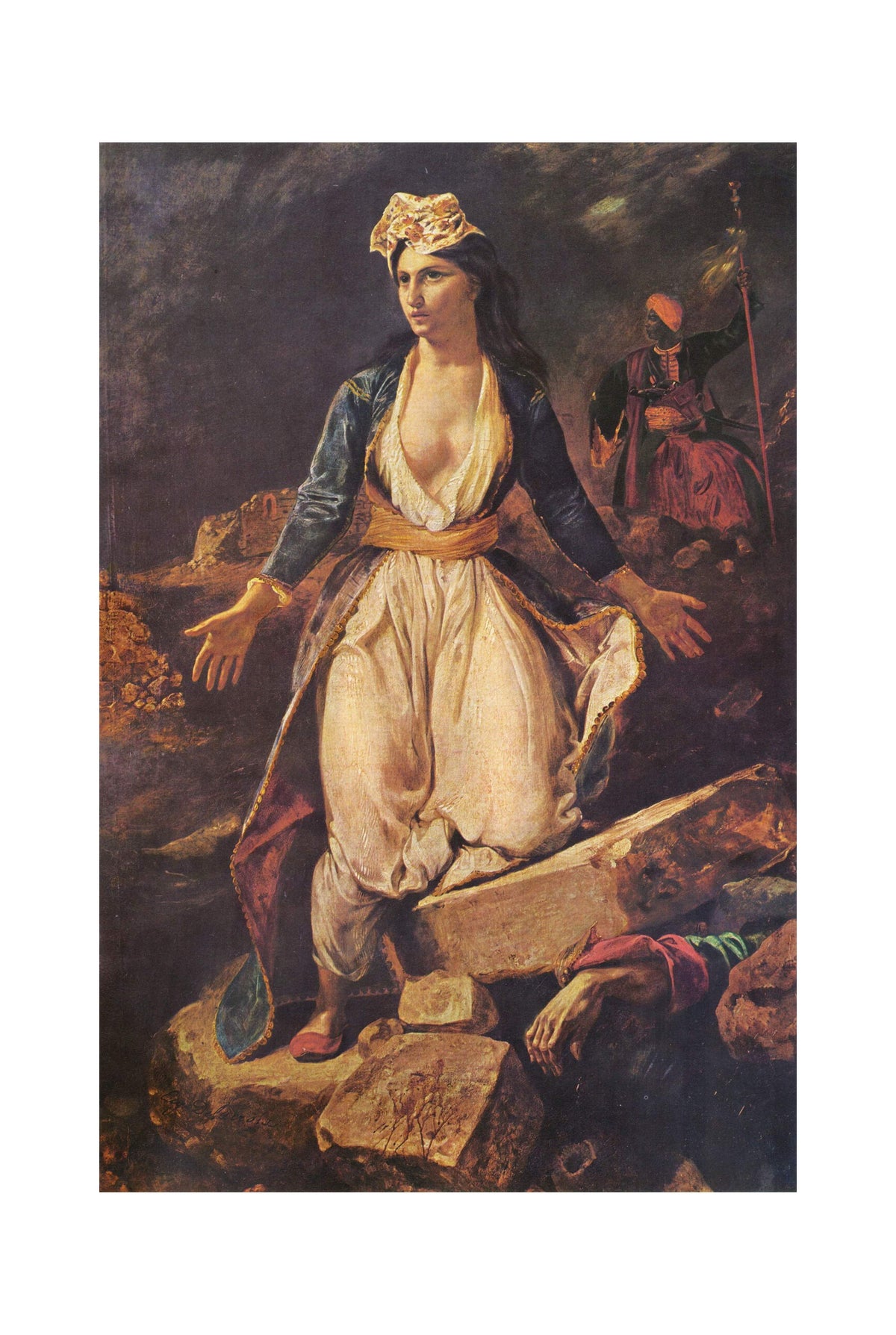
This is a reproduction print of the famous historical painting “Greece on the Ruins of Missolonghi” (La Grèce sur les ruines de Missolonghi), created by Eugène Delacroix in 1826. One of the most powerful allegorical works of French Romantic painting, the artwork commemorates the fall of Missolonghi in April 1826, during the Greek War of Independence against the Ottoman Empire. The original painting is housed at the Musée des Beaux-Arts de Bordeaux in France.
The composition portrays Greece personified as a young woman dressed in traditional Greek clothing, kneeling amid the ruins of the devastated city. With her arms extended in a gesture of grief and appeal, she represents the suffering of the Greek people and their struggle for freedom. Beneath the rubble, the hand of a dead defender emerges from the ruins, while an armed Ottoman soldier stands in the background, symbolizing the conquest of Missolonghi.
Delacroix's painting is particularly remarkable for its powerful allegorical symbolism, emotional intensity and dramatic use of color. The woman's white garments contrast with the dark ruins, emphasizing both the tragedy of the destruction and the resilience of the Greek nation. Rather than depicting the siege as a conventional battle scene, Delacroix transforms the historical event into a universal image of national suffering, sacrifice and the desire for independence.
Painted in oil on canvas, the original artwork measures approximately 208 × 147 cm. The painting was inspired by the Third Siege of Missolonghi (1825–1826), which ended after the city's defenders attempted a desperate breakout in April 1826. The catastrophe became a major symbol of the Greek independence movement and inspired widespread sympathy throughout Europe. Delacroix's work remains one of the most recognizable artistic expressions of Philhellenism, European Romanticism and the struggle for Greek independence.